
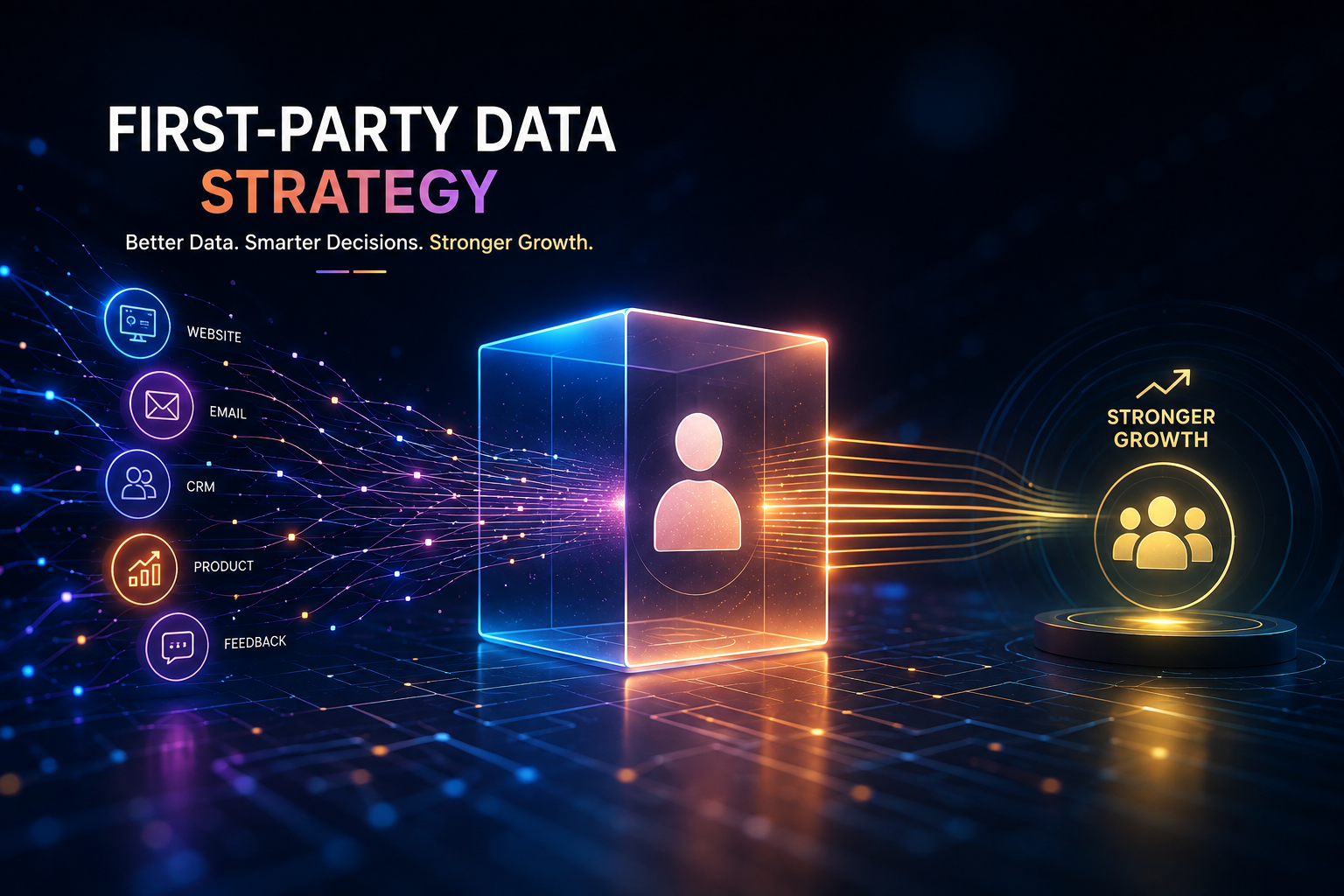
A first-party data strategy for B2B SaaS is becoming a genuine competitive advantage in 2026. Buyers don’t shop the way they used to, and most SaaS companies haven’t caught up. That’s why first-party data has moved from a nice-to-have to an essential part of how SaaS companies understand, engage, and grow their customer base.
Why Are B2B Buyers Avoiding Sales Reps?
Buyers are doing more of the work themselves before a rep ever gets involved. According to Gartner’s March 2026 sales survey, 67% of B2B buyers now prefer a rep-free buying experience, and 45% had already used AI during a recent purchase. People are researching, comparing vendors, and building internal business cases largely on their own.
But that doesn’t mean sellers have lost their value entirely. A separate Gartner survey published in May 2026 found that 69% of buyers still turn to sales reps to validate AI-generated insights. Buyers used an average of seven information sources during a single purchase, and interestingly, 51% said they were more likely to run into misleading information from GenAI, while 49% said the same about sales reps. Trust is thin everywhere right now, which makes accurate and consistent information more important than ever.
So what does this mean in practice for SaaS marketing and sales teams? A few things:
- Your website and product content now carry the weight that a rep used to carry early in the sales cycle.
- If the information across your website, content, product, and sales conversations is inconsistent or outdated, buyers will notice the gaps.
- Reps still matter, but mostly at the moments buyers need reassurance, like confirming a use case or defending a purchase internally.
Since a growing share of that early research now happens through AI tools rather than a search bar, it’s worth understanding how Google AI Overviews are already reshaping SEO and what that means for how buyers first encounter your brand.
Is AI Adoption Actually Outpacing Data Readiness?
Short answer: yes, and by a wide margin. Experian’s 2026 Digital Trends report found that 94% of marketers are investing broadly in AI. Adoption numbers from Salesforce’s Tenth Edition State of Marketing report tell a similar story, with 75% of marketers already using AI and 81% saying they’d trust it to handle customer responses at scale.
The catch is what’s feeding that AI. The same Salesforce research found that 84% of marketers admit they’re still sending generic campaigns, and 98% report hitting barriers to personalization, with messy or disconnected data cited as the top culprit. Only 58% of marketers have full access to service data internally, 56% to sales data, and 51% to commerce data. If your teams can’t see the full picture, neither can your AI tools.
Salesforce’s India-focused findings show the same pattern, just sharper. In that market, 81% of marketers have adopted AI, 92% of customers now expect two-way conversations, and 86% of marketers say they’d trust AI to respond to customers directly, but fragmented data is holding them back.
The pattern across both markets is consistent. The AI is ready. The data feeding it usually isn’t.
Does Unified Data Actually Pay Off?
This is where things get useful for anyone building a business case. Salesforce found that marketing teams satisfied with their unified customer data are 42% more likely to respond promptly to customers and 60% more likely to use AI agents effectively. High performing marketers, meaning the ones getting the best return on marketing spend, are 2.8 times more likely to use customer data for relevant experiences and 2.4 times more likely to have unified their data sources compared to lower performers.
This isn’t only a marketing problem. It touches product, sales, and customer success too. Usage data, support tickets, billing patterns, and adoption signals are all first-party assets most SaaS companies already own but rarely connect. Companies that link these together tend to see compounding benefits, including sharper lead scoring, earlier expansion signals, and AI tools that actually understand the customer instead of guessing.
Is First-Party Data Just a Privacy Fallback, or Something Bigger?
It’s bigger, and the data backs that up. Experian’s 2026 Digital Trends report found that 70% of B2B marketers plan to increase their use of first-party data this year, more than any other data type, including second-party, zero-party, or third-party sources. Experian’s 2026 State of Advertising report describes this shift as “fragmentation before consolidation.” First-party data is now being generated simultaneously across CRM systems, product usage, owned media, and partner touchpoints, and the companies that win will be the ones that connect these signals into one governed system instead of managing them separately.
For B2B SaaS specifically, that means product telemetry, CRM records, support history, and marketing engagement all need to live somewhere sales, marketing, and AI tools can pull from consistently. Fragmented data doesn’t just weaken personalization. It undermines the trust buyers are already skeptical of.
This connects to a bigger shift happening in how brands get discovered in the first place. Our post on why brand mentions are becoming more valuable than backlinks in AI search digs into why the same clean, consistent, first-party signals that improve personalization also improve how AI systems represent your brand to buyers who never visit your site directly.
So What Should SaaS Leaders Actually Do With This?
A few takeaways stand out from all of this research:
- Buyers research independently but still verify with humans, so your first-party data needs to keep self-service content and rep conversations equally accurate.
- AI without unified data produces generic results, and 98% of marketers already feel this pain. Fixing the data pipeline has to come before scaling AI, not after.
- Unification has a measurable payoff. Companies with connected data are meaningfully more likely to respond faster, personalize better, and get real value from AI compared to those still working with scattered systems.
First-party data strategy is no longer a compliance checkbox. For B2B SaaS companies, it is becoming part of the infrastructure behind better marketing, smarter sales conversations, more useful AI, and stronger customer experiences.
The companies that win will not necessarily be the ones with the most data. They will be the ones that connect the right signals and use them to understand their customers better.


