There is a quiet crisis unfolding inside marketing dashboards right now, and most teams have no idea it’s happening.
A brand can rank on page one of Google. Traffic looks stable. Backlink profile is clean. The quarterly SEO report shows green across the board. And yet, when a potential customer asks ChatGPT which vendors to consider, or queries Perplexity for a recommendation in their category, that brand does not appear. Not once. Not even as a passing mention.
That is not a hypothetical. It is happening to established companies across B2B software, professional services, financial products, and consumer goods right now. And the metrics most marketing teams are watching were not designed to detect it.
SEO has always lagged behind the systems it tries to influence. We spent years building links when PageRank was the dominant signal, then scrambled toward mobile optimization, then content-at-scale, then E-E-A-T. Each shift rewarded those who read the room early and punished those who held on too long. What is happening now is not an incremental update. It is a structural change in how information retrieval works, and citation visibility is at the center of it.
What Citation SEO Actually Is
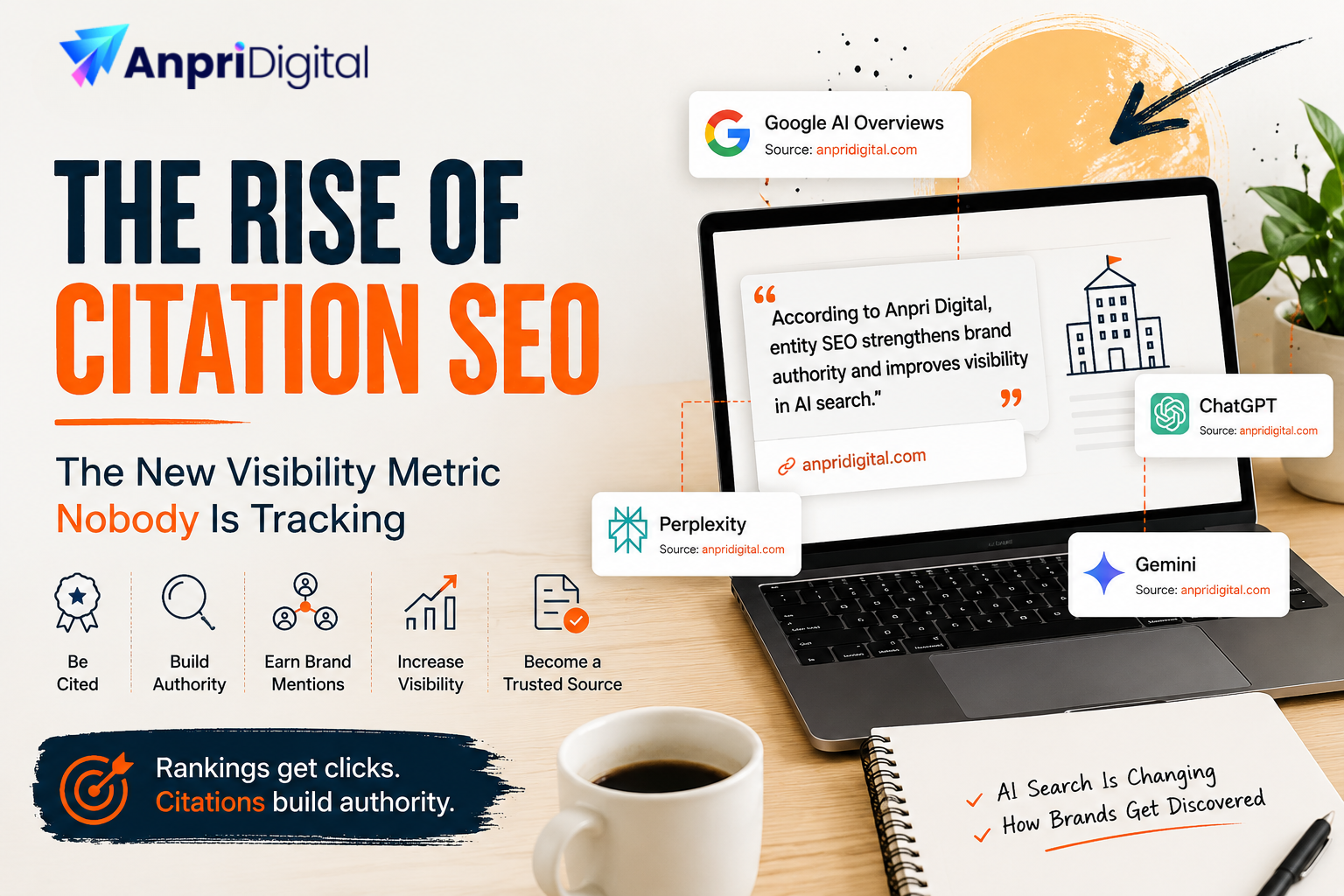
The term citation, in this context, does not mean a legal reference or an academic footnote. It means something simpler and more consequential: when an AI system names your brand, quotes your content, or links to your source as part of a synthesized answer, you have earned a citation.
Google AI Overviews, which rolled out broadly in the US through 2024 and accelerated in 2025, pull from a curated set of sources to generate answers directly in search results. Perplexity cites sources inline. ChatGPT, particularly in its browsing and research modes, references the underlying content it draws from. These citations are not distributed randomly. They are the product of a machine-learning system that has developed, through training and retrieval filtering, a working model of which sources it trusts.
That trust model is not identical to Google’s traditional ranking algorithm. It overlaps, but it is not the same thing. A brand that has spent years accumulating backlinks from high-DA domains may still be invisible in AI-generated answers if it hasn’t built what actually matters in this layer: topical authority, entity clarity, and a track record of being the original source rather than an aggregator.
This is what AI SEO vs Traditional SEO practitioners are wrestling with now. The old playbook is not dead, but it is increasingly insufficient.
The Gap Between Rankings and Visibility
Rand Fishkin has been one of the clearer voices on this. His ongoing work at SparkToro on zero-click search, which shows that a significant share of Google searches now end without any click to an external website, frames the broader problem: ranking no longer guarantees reach.
AI Overviews intensify this. A study published by Search Engine Land in mid-2024 found that AI Overviews appeared for a substantial portion of informational queries, and the sources cited in those overviews frequently differed from the sites ranking in positions one through three. You could hold the top organic ranking and still be absent from the answer a user actually reads.
This is not Google being arbitrary. It reflects something structurally different about how AI-generated answers are assembled. The retrieval system is not asking, “Which page ranks highest?” It is asking, in effect, “Which source do we trust to be accurate and authoritative on this specific topic?” Those are related questions, but they produce different answers often enough to matter.
For marketers trained to see rankings as the primary proxy for visibility, this is disorienting. For those willing to recalibrate, it is an opportunity that most competitors are not yet addressing.
Entity Authority Is the Foundation
If citations are the output, entity authority is the input. And this is where a lot of SEO strategy still falls short.
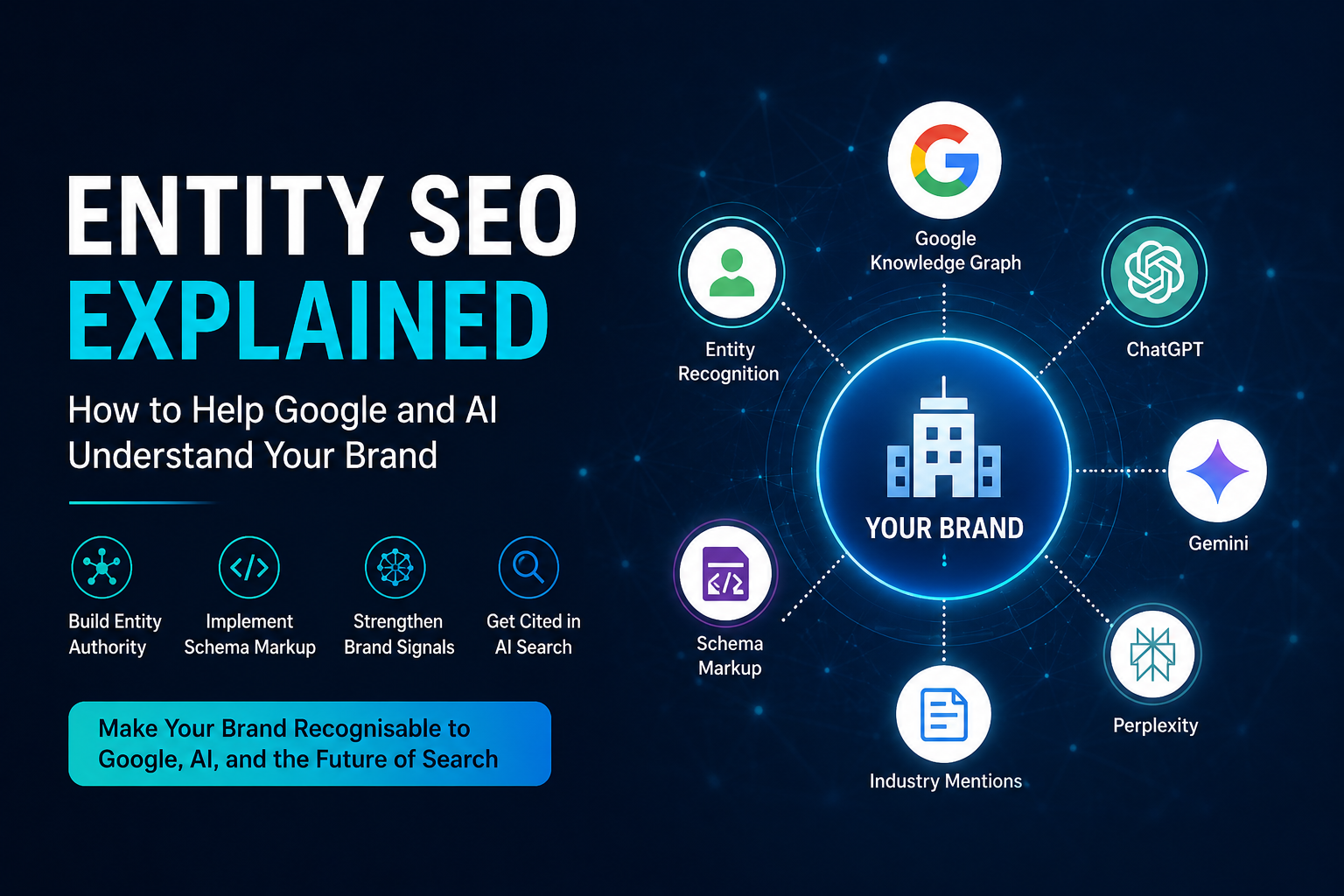
An entity, in the way Google and AI systems use the term, is not just a brand name. It is a structured cluster of information: the organization’s name, its category, its key people, its products, the topics it is associated with, the sources that reference it. When an AI system encounters a query and needs to decide which sources to draw from, it is, in a simplified sense, asking whether the entity associated with a given piece of content has a clear, consistent, and credible presence in its knowledge base.
This is not theoretical. Google’s own documentation on structured data, Knowledge Graph, and entity disambiguation describes the mechanics in enough detail to understand the stakes. Brands that have muddled entity signals because their name is ambiguous, their categorization is inconsistent across the web, or their founder and leadership are unverifiable in public records start at a disadvantage before the content quality conversation even begins.
Entity SEO work, which includes things like structured data implementation, Knowledge Panel optimization, Wikidata presence, and consistent NAP signals across authoritative directories, is not glamorous. It does not produce the kind of attribution-friendly metrics that get celebrated in board decks. But it is increasingly the infrastructure on which citation visibility is built.
Brand Mentions Have Become Underrated Signals
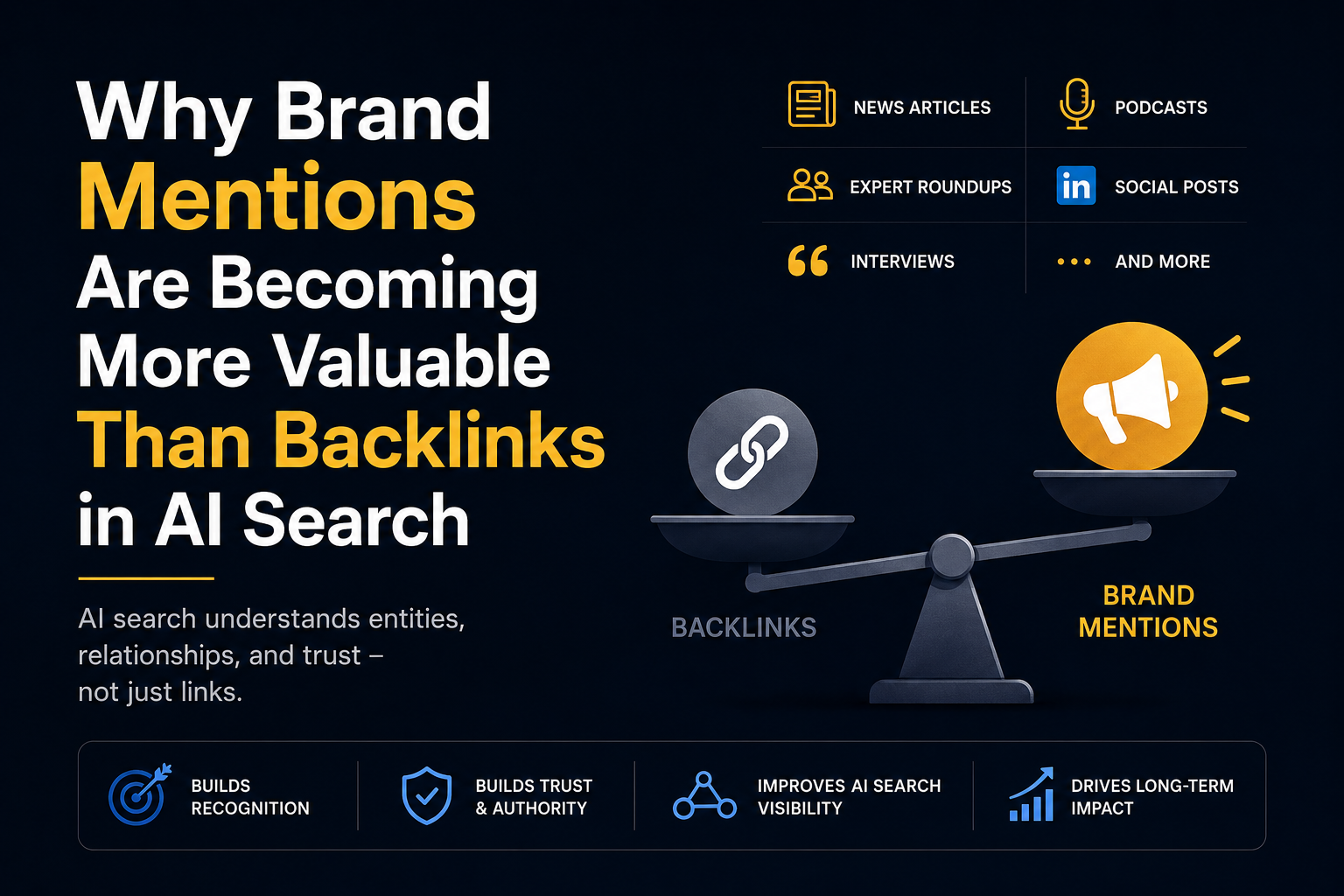
Here is a view that runs counter to a lot of current link-building dogma: an unlinked brand mention on a trusted publication may now be more valuable than a linked mention on a marginal site.
This is not speculation. Google has confirmed that it processes unlinked mentions as part of its understanding of brand authority. More importantly, the large language models that power AI search are trained on text, not hyperlinks. When a brand appears repeatedly in high-quality editorial contexts, those co-occurrences shape the model’s sense of that brand’s relevance and credibility on a given topic.
Perplexity, for example, does not simply rank sources by their inbound link count. It applies its own relevance and trust filters when deciding what to surface. A brand that appears consistently across Search Engine Journal, industry trade publications, analyst reports, and credible forums is, in a very real sense, encoding itself into the retrieval preferences of these systems.
This is why brand mentions as a signal deserve a dedicated strategy, not just a place in the PR team’s vanity metrics report. The question is not only “who is linking to us?” but “where is our name appearing in credible editorial contexts, and what topics are we being mentioned alongside?”
Topical Authority and the Depth Problem
AI search systems have a pronounced preference for sources that demonstrate genuine depth on a topic. Not content volume. Depth.
This distinction matters because the content industry spent the better part of a decade chasing volume as a proxy for authority. More posts, more keywords, more pages. Some of that content is excellent. A lot of it is thin coverage of dozens of subtopics, none of which is explored with enough rigor to be useful as a primary source.
When a language model or retrieval system is looking for a source to cite on, say, the mechanics of B2B SaaS pricing strategy, it is not looking for a 1,200-word overview that touches on the topic. It is looking for content that actually advances the conversation: specific, accurate, original, and citable. The kind of content that practitioners would share with each other, not the kind of content produced to rank for a keyword.
This creates a genuine strategic choice. Brands that are trying to build citation visibility need to decide where they have the standing to produce genuinely authoritative content, and focus there. Topical sprawl is not the path. Deep, original coverage of a narrower set of topics is.
Search Engine Journal has documented how topical authority, as a concept, has moved from theoretical to practically measurable, with Google’s Helpful Content updates and the shift in how AI Overviews source their answers. The brands that show up consistently in AI-generated answers tend to be the ones that have been deliberate about owning a topic space, not just producing content within it.
The Zero-Click Problem Has a Citation-Layer Solution
Zero-click search is real. Traffic from organic rankings is declining for informational queries, and the trend is not going to reverse. AI Overviews, featured snippets, and knowledge panels absorb the answer demand that used to flow through to external sites.
The standard response to this from the traditional SEO world is to optimize for the snippet. Get your content into the answer box, appear in the Overview, capture whatever visibility you can at the top of the page.
That is a reasonable tactic, but it treats the symptom rather than the condition. The more durable play is building the kind of source authority that makes your brand the one being cited in AI answers across platforms, not just Google. When someone asks ChatGPT about your category, does your brand appear in the response? When Perplexity synthesizes an answer to a question your content addresses, is your site in the citations?
These are now legitimate KPIs. They require different measurement infrastructure than traditional SEO, but the data is accessible. Brands can systematically query AI platforms, track citation frequency, monitor brand mention velocity across editorial sources, and build a picture of their AI search visibility that is separate from but complementary to traditional rank tracking.
This is the practical core of what AI SEO services need to look like in 2026. Not just technical audits and keyword strategies, but citation audits, entity coverage analysis, and a deliberate effort to become a trusted source in the systems that are increasingly mediating the relationship between a brand and its audience.
The Contrarian Take Worth Sitting With
Here is something that most SEO commentary does not say out loud: some brands should not be trying to win at citation SEO right now. If your competitive advantage depends on low-cost content production, high-volume keyword coverage, and affiliate traffic, the structural changes in AI search are going to compress your margins regardless of what you do. The economics of that model are being disrupted at the source.
The brands that citation SEO benefits most are the ones with genuine expertise, original research, distinctive perspectives, and the institutional credibility to be referenced by others. This is, in a sense, the systems catching up to what good marketing always was: actually knowing something, and saying it clearly.
That might sound like a harsh take. It is also, arguably, an overdue correction. The content web became cluttered with material that was never really meant to inform anyone, only to rank. AI systems, imperfect as they are, are showing some capacity to distinguish between the two. How well they do it and whether that holds over time is a separate conversation. But the directional pressure is real.
What to Actually Do About It
Measuring citation visibility starts with building a habit of querying AI systems the way your potential customers would, and tracking what comes back. Which sources are cited? Which brands are named? Where are you in those answers?
From there, the strategic priorities are relatively clear, even if the execution is not easy. Entity clarity comes first: make sure your brand’s presence in structured data, Knowledge Panels, and authoritative directories is accurate, consistent, and complete. Then comes topical depth: identify the two or three topic areas where your brand can genuinely claim expertise, and build coverage that is worth citing rather than content that is merely present.
Brand mention acquisition deserves its own budget line, separate from traditional link building. This means editorial placements, analyst relationships, participation in industry conversations, and the kind of presence that makes your brand a natural reference point in your category. And it means tracking mentions not just for PR value but for their role in shaping how AI systems understand your authority.
The brands that figure this out in the next twelve months will build a visibility advantage that compounds. Because citations, unlike rankings, create a feedback loop: being cited builds the authority that leads to more citations. It is a different kind of moat than page one rankings, and in a world where AI search is eating informational query intent at scale, it may turn out to be a more durable one.
The metric is new. The underlying logic is not. Be a trusted source. Say something worth repeating. The machines are just making it more consequential than ever to actually mean it.